
English| EUR
Suggested for you
More currencies
Choose a language
The 220-kilometer stretch between Vietnam's largest metropolis and the fishing village turned beach resort is one of the country's most traveled coastal routes. Understanding the variables that shape your journey time helps you optimize departure slots and arrival plans.
Quick answer
The ho chi minh to mui ne travel time ranges from 4 to 5 hours by private vehicle or bus, covering approximately 220 kilometers via National Route 1A and Highway 706. Departure time significantly affects duration—early morning trips between 6:00 and 10:00 bypass peak traffic in District 1 and Binh Thanh, while midday and late afternoon departures can add 45 to 90 minutes navigating urban congestion and construction zones along the Binh Thuan corridor.
The coastal corridor linking Saigon to Binh Thuan Province operates around the clock, but the clock itself tells only part of the story. Traffic volume in Ho Chi Minh City's eastern districts peaks between 11:00 and 14:00, and again from 16:30 to 19:00, transforming what should be a 25-minute exit into an hour-long crawl past Thanh Da Peninsula and the Long Binh junction. Once clear of the metropolitan boundary, National Route 1A opens into a two-lane highway flanked by dragon fruit plantations and cashew groves, where surface conditions and roadwork schedules determine your average speed more than driver preference. The ho chi minh to mui ne travel time tightens or stretches based on three factors travelers often underestimate. First, the condition of Highway 706—the final 30-kilometer spur from Phan Thiet into Mui Ne—which narrows through fishing hamlets and sand dune access roads where tour vans, cargo trucks, and moped traffic share a single lane in each direction. Second, rest stop discipline: the route offers limited service infrastructure between Bien Hoa and Phan Thiet, and unplanned detours for fuel or facilities can add 20 minutes each. Third, weekend and holiday migration—Vietnamese families departing for the coast on Friday evenings and returning Sunday afternoons create bottlenecks at the Dong Nai River crossings and the Ca Na Pass approach. Drivers familiar with the route minimize variability by departing before daybreak, when the highway carries only long-haul freight and early fishing crews. The predawn window also delivers cooler cabin temperatures and better visibility along the coastal segment, where morning light reveals the dune landscapes and offshore fishing fleets that define the Binh Thuan shoreline. For travelers coordinating resort check-ins or onward connections, calculating backward from a desired arrival time means accounting not for the advertised four-hour journey, but for the five-hour reality that includes urban exit delays, rest stops, and the final approach through Phan Thiet's market district. The route's rhythm follows the highway itself—dense and stop-prone through the Saigon periphery, open and steady across the Dong Nai plateau, then pinched again through the Phan Thiet corridor before the final coastal run. Understanding that rhythm transforms travel time from an estimate into a predictable logistics input, the kind of operational detail that separates a tight connection from a missed one.
“The coastal corridor operates around the clock, but departure timing determines whether you navigate open highway or urban gridlock.”
This timeline reflects a typical bus journey from Ho Chi Minh City to Mui Ne, covering approximately 220 kilometers along coastal Highway 1A. The entire trip takes 4 to 5 hours depending on departure time and traffic conditions leaving the city.
Most buses leave from the backpacker district or Pham Ngu Lao area in the early morning. Boarding begins 15 minutes before scheduled departure, and coaches typically offer reclining seats with air conditioning.
The route passes through the industrial outskirts of Ho Chi Minh City before opening onto Highway 1A. Traffic is lighter after 07:30, and the landscape shifts from dense urban sprawl to rice fields and dragon fruit orchards.
Most services include a 15- to 20-minute break at a roadside café or service station. Facilities are basic but functional, and vendors sell drinks and snacks.
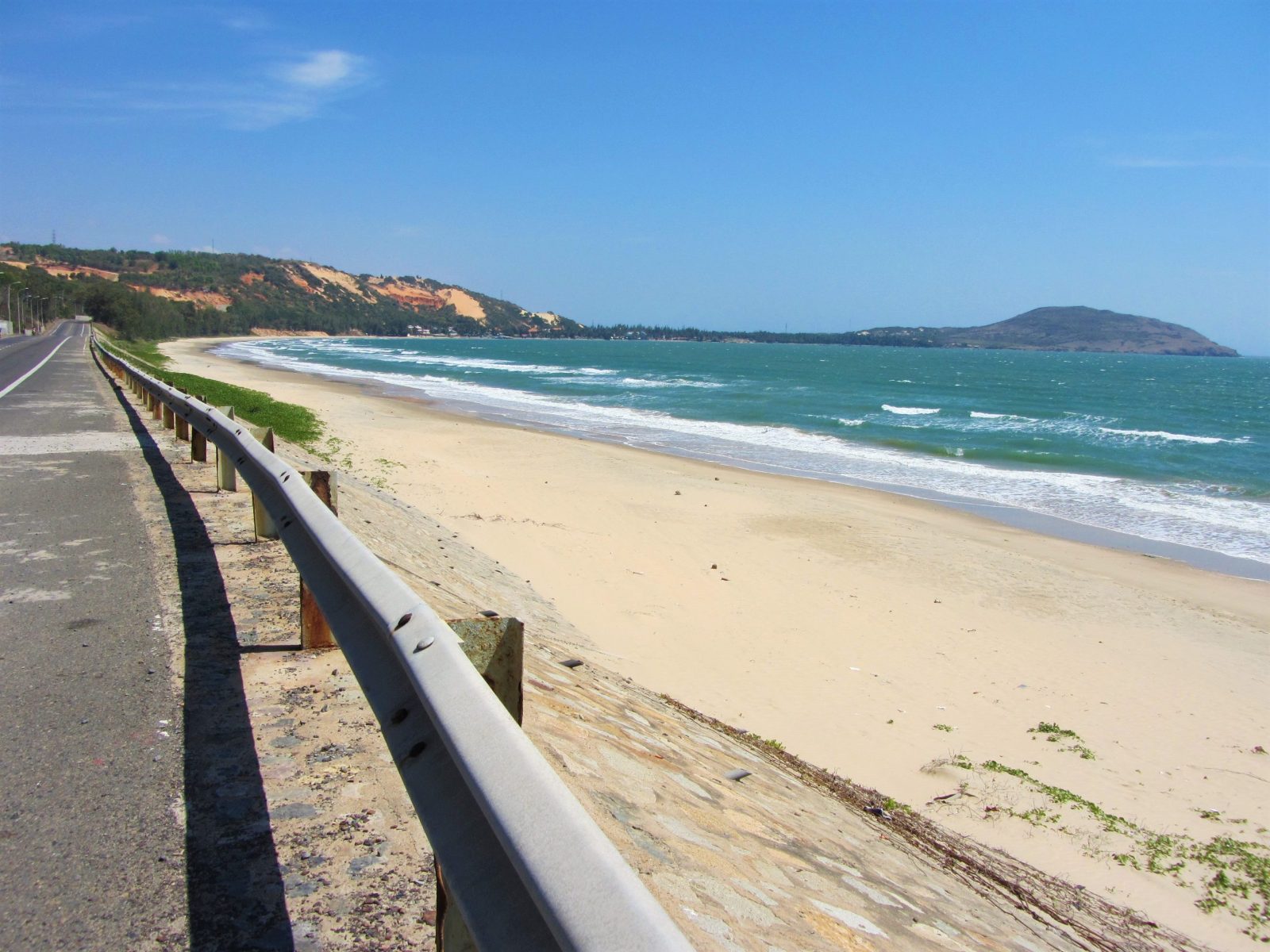
The road hugs the shoreline as you enter Binh Thuan Province, with glimpses of fishing villages and sand dunes to the east. Buses typically drop passengers at hotels along Nguyen Dinh Chieu Street in Mui Ne, so confirm your stop with the driver in advance.
Mui Ne is situated along the coast of Binh Thuan Province, approximately 200 kilometers east of Ho Chi Minh City. The easiest approach is traveling by road via the modern CT01 Expressway (Ho Chi Minh City - Dau Giay - Phan Thiet), which has cut down the travel time significantly compared to the old highway routes.
CT01 Expressway to Phan Thiet and Mui Ne
Sleeper Bus via CT01 Expressway to Huynh Thuc Khang Street
SPT2 Train from Saigon Station to Phan Thiet Station
Aiming for a departure between 06:00 and 10:00 is highly recommended to escape the congested morning rush hours of Ho Chi Minh City. This timing ensures you complete most of the journey before the midday heat peaks, allowing for a smoother arrival at your resort.
The best arrival window in Mui Ne is 06:00–10:00, which requires an early morning departure from Ho Chi Minh City. This early start avoids the intense midday heat and potential traffic congestion leaving the city.
Sunny, low humidity, 22–32°C
This period offers clear skies and strong winds ideal for water sports, though expressways out of Ho Chi Minh City see heavy weekend traffic.
Afternoon rain showers, 25–32°C
Rainfall usually occurs in short afternoon bursts, meaning mornings remain clear. Traveling during this window requires careful planning for sudden storms.
—
Departing between 05:00 and 06:00 on Tuesday through Thursday ensures you arrive before the intense midday heat and avoid city commuter rushes.
Hot, dry conditions, 26–34°C
Millions of travelers exit Ho Chi Minh City during major public holiday periods, causing massive gridlock on the Phan Thiet-Dau Giay Expressway.
Verdict: Depart Tuesday to Thursday between 05:00 and 06:00 from November to March to secure the smoothest road travel and optimal weather upon arrival.
Transit routes between Ho Chi Minh City and Mui Ne operate continuously throughout the week. Services remain available at all hours to accommodate various travel schedules.
Complete these steps before your journey to ensure smooth travel from Ho Chi Minh City to Mui Ne.
Everything you need to know about ho chi minh to mui ne travel time
The typical ho chi minh to mui ne travel time generally ranges between 3 to 5 hours depending on road conditions and the specific vehicle used. High-speed highway developments have helped improve efficiency for travelers heading to the coast.
While the distance remains constant, the ho chi minh to mui ne travel time can vary if you select a private car versus a larger bus. Private transfers often provide a more direct route, whereas buses may include scheduled stops for passengers.
We suggest planning your departure to align with an arrival between 06:00–10:00 to ensure a smooth start to your day. This recommended ho chi minh to mui ne travel time window allows you to avoid the busiest periods on the road.
Congestion leaving Ho Chi Minh City frequently impacts the overall ho chi minh to mui ne travel time, particularly during weekends or holidays. Starting your journey early in the morning is the most effective way to minimize these delays.
The transit route typically involves traversing the highway toward the Binh Thuan province, passing through various coastal landscapes. Passengers often utilize these transit services to reach popular destinations like sand dunes and beach resorts without navigating local traffic themselves.
Families often find the transfer convenient, provided they choose a transport method that accommodates their group size and luggage requirements. A private vehicle can offer more flexibility for frequent breaks during the journey compared to scheduled coach services.
The best arrival window is between 06:00–10:00, as this early timeframe helps travelers avoid midday heat and heavy exit traffic from the city. Arriving within this period allows for a more relaxed transition into your coastal visit.
There is an entrance fee of 0 VND for this route, as it is a standard transit journey between cities. You will not encounter any tolls or access fees categorized as entrance charges for this travel path.
Ho Chi Minh to Mui Ne Train
Read more GuideHo Chi Minh to Mui Ne Bus Guide
Read more GuideDistance from Ho Chi Minh to Mui Ne
Read more Tickets & toursHo Chi Minh to Mui Ne Limousine
Read more GuideWhere is Mui Ne in Vietnam?
Read more Tickets & toursMui Ne Day Trip from Ho Chi Minh City
Read more Tickets & toursHo Chi Minh to Mui Ne Private Transfers
Read more